The same obsession since 1976: first in sound hardware, then valves and tape, then rooms, now space itself.
Physical modelling, end to end. Mark Mangini, mixing Blade Runner 2049: "It doesn't use recordings of impulse responses; it uses an algorithm to create them."
The plug-ins that made records sound warm in the nineties and the immersive tools used on Blade Runner 2049 come from the same Barcelona house, at the same address.
Neither of these is ours. They are technical interviews in post-production publications, and the men who mixed the film are speaking for themselves.
2017
Blade Runner 2049
Ron Bartlett, talking to postPerspective about the mix, described the reverb he had been working with and where it came from. A decorrelated reverb, he explained: add as many channels as you like and pan them into every speaker in the room.
“
Mark Mangini and I helped to develop DSpatial. It's a very unique reverb
Mark Mangini told it to Pro Sound Effects, and said what they reached for it to do: the very big interiors, Wallace's office among them. An algorithm building the impulse responses rather than a library of recordings of rooms.
“
Ron Bartlett and I have been beta testing this new immersive reverb called DSpatial Reverb
Our tools have gone into work for Apple, Microsoft, NHK, Skywalker Sound, Sony, Disney, Warner Bros, Electronic Arts and Technicolor.
Our journey
Not a new company
Every entry below links to something you can open. Where there is nothing to open, it says so.
Third partyOurs, archivedOur account
Jan 1994
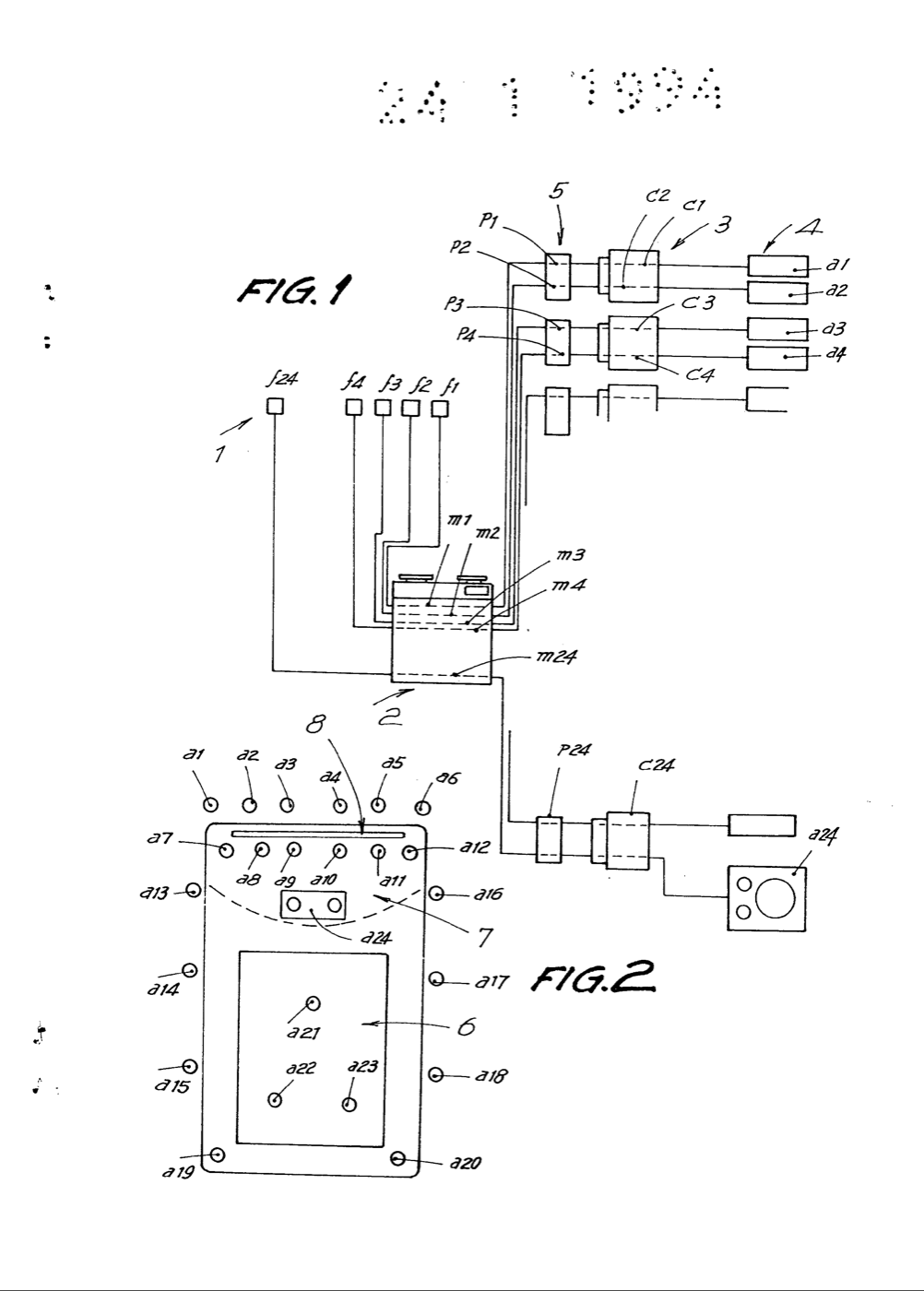
A patent for a room full of loudspeakers
Before the company had sold a single plug-in, its founder registered a method for reproducing sound in auditoriums and theatres: every source on its own track, its own amplifier channel and its own loudspeaker, spread around the audience, never mixed. As the document puts it, the mix happens in the air and not electronically. Filed January 1994, granted September 1997, published that November, and public ever since.
Figures 1 and 2 of the patent filed in January 1994, as stamped by the OEPM.
Among the five plug-ins on the Anaheim stand there was one that was not about warmth at all. Rivers described what it was for in his own words, and the phrase he reached for would not become an industry in Barcelona for another eighteen years.
“
DUY Wide is a stereo space expander with most likely applications being music for multimedia and virtual reality production
Mix Sound for Film, run with the Cinema Audio Society and the Motion Picture Sound Editors. Two Master Classes in the William Holden Theatre, in a series otherwise made up of Dolby, DTS, Auro and AID. The keynote that morning was given by Mark Mangini.
“
Spanish company DSpatial will be showcasing their new immersive physical modeling mixer
Our own front page that summer carried the name, one claim, and a sentence about what the engine did: recreate virtual or real spaces at a touch. The positioning has not moved since.
Mike Thornton covered the launch for Production Expert and took the description at face value, putting it in his headline and the engine in the body of the piece.
The Audio Engineering Society put Rafael Duyos on its Audio for Cinema panel at the 143rd convention, alongside Avid, Sound Particles and Flux: four different approaches to the newest immersive cinema formats.
Avid and DSpatial ran a joint immersive audio seminar in Akasaka. The Japanese trade press covered it and introduced the second session by its speaker: the Barcelona company's founder, who had filed a 3D audio patent back in the nineties.
Four versions, and Sound & Recording in Tokyo covered the launch with a price in yen for each one. That is how you can tell a product is genuinely being sold somewhere rather than merely announced.
We built a dedicated version of Reality Builder for Mark Mangini and mapped the 54.1 loudspeakers of the AlloSphere at UC Santa Barbara for Lena Herzog's oratorio for the world's vanishing languages, shown in Venice in 2022. The work's public credits name the AlloSphere and Unreal Engine, not us, so this one is our own account.
Dspatial is the company that owns the DUY name and its technology. Dspatial develops immersive audio for film and post-production. DUY develops plug-ins for mixing and mastering. Two brands, two catalogues, two sites.